

Ghana’s population structure has changed over time. It stood at 30.8 million in the 2021 census and has grown to approximately 34.4 million. Based on census data estimates, the urban population is projected to rise from 56.7% in 2021 to 60.7% by 2030. This ongoing urbanisation in major centres like Accra is creating a housing deficit, hence long-term opportunities for investors.
As an investor, how would you choose the best properties to buy in Ghana?
Understanding real estate development in Accra is essential for identifying high-performing investment areas.
There are several factors to consider within the institutional frameworks. In particular, while the luxury segment is lower than overall demand, it is stronger in Accra for three main reasons: the steady arrival of international corporate professionals and diplomatic personnel, short-let demand from students and tourists, and Ghana’s diaspora. In particular, diaspora remittances reached $4.6 billion in 2023, making Accra one of the fastest-growing luxury property hubs in Africa.
Here, we will provide a guide for investors on choosing the best properties to buy in Ghana, based on demographic data and national regulations, to achieve long-term profits from their investments.
Properties to buy in Accra: investment security
As a first consideration, when investing in Ghana’s landscape, analysing the national legal framework is mandatory. It can significantly affect the decision to buy a property. Buyers must navigate a legal system in which 80% of land is governed by customary law.
Adherence to state regulations is critical for investment security. In fact, these strictly dictate what property you can own, the cost involved and the legal protection you are entitled to get. More specifically, local regulations affect the property-buying process through foreign ownership restrictions, leasehold limits, due diligence, title registration, costs, and taxation.
As a final requirement, the Alternative Dispute Resolution (ADR) states that any conflicting claims or boundary disputes arising during the land title registration process must be resolved before a court. This regulation affects buyers by providing a potentially faster administrative pathway to resolve overlapping boundary or ownership claims before title perfection.
Foreign ownership restrictions and leasehold limits
According to Article 266 of the Constitution and the Land Act 2020, the ownership of land or property by foreigners is absolutely forbidden. A foreigner can lease a property for up to 50 years. However, lease renewal must be negotiated wisely for those who intend to make a long-term investment.
As for Ghanaian citizens, section 9 of the Ghana Land Act prohibits the granting of absolute ownership over communal lands. Families are eligible to be granted only 50-99 years of leasehold interests to preserve a property for future generations without owning common areas.
Diligence and property registration
Land in Ghana is held under a mix of state and private ownership systems. To limit episodes of double sales and boundary disputes, regulations set a Due diligence process that affects the buyer timelines and budgeting:
- Legal Representation: buyers must hire a lawyer to write the conveyancing documents
- Surveying: a licensed surveyor inspects the property to generate a barcoded site plan
- Indefeasibility of Title: once registered, the Land Title Certificate is issued, providing legal indefeasibility of ownership.
Costs and taxation
Fiscal regulations significantly impact the process of buying a property. Before the investment, an amount of 4-7% of the investment value must be considered to cover costs and taxes, such as:
- Stamp duty: tax for registration
- Value Added Tax (VAT): the standard VAT rate is 15%, bringing the total to 20% when NHIL and GETFund levies are included.
- Rental Income Withholding: The Ghana Revenue Authority collects 8% of gross residential rental income and 15% of foreign individuals’ rental income.
Once costs, timelines, and legal requirements are considered, investors can identify the most suitable opportunities based on market demand and trends.
Apartments in Ghana Accra: High-Demand Neighbourhoods
Accra is a fast-growing urban centre. Investing in real estate development must be based on thoughtful analysis. The property market is not uniform. Prices and yields vary significantly by neighbourhood. Where you invest should depend on what you’re trying to achieve. Key neighbourhoods include:
- Airport residential area: strategic position for diplomats and corporate tenants
- Cantonments: embassy closeness, area of interest of international organisation workers
- Ridge: where institutions are based and famous for its historical heritage.
However, where to invest in Accra depends on the purpose of the investment: some areas are more profitable for Airbnb short-term rentals. The Airport residential area, Cantonments, and others, such as Osu for its active nightlife, and Labone, a residential area close to Osu.
If the investment aims for long-term rental, most of the demand comes from Osu and Cantonments, where tenants have high rent-paying capacity, and East Legon, where most of the schools and institutions are located.
However, some of these areas, such as the Airport residential area and Cantonments, are oversaturated with tourists. Data report demand typically fluctuates during quieter seasons.
Invest wisely: choose areas with high demand and few properties. Spintex is a growing borough in Accra. The high- and middle-class population and tenants’ demand are growing steadily, ensuring long-term profitability. Accra’s property market is not uniform. East Legon prices and rents are roughly double what you’ll find in Spintex.
Investing in high-demand residential areas with ongoing infrastructure development and job opportunities, while avoiding the oversaturated short-let market, can be a great option for long-term profit purposes.
Types of property to buy in Ghana
Ghana is now experiencing a period of growth and economic stability, attracting potential investors. Choosing the type of property before investing is crucial for a general prediction of profit.
As noted above, Accra’s gentrification is expected to continue. This would urge the need for new apartments for residential use. Some investors, though, largely overlook the possibility of townhouse investments. Against every prediction, this represents the best choice for capital growth. The combination of space, security, and community management creates a premium environment that compounds year on year.
On the other hand, apartments represent a win for cash flow. The tenant demographic in Ghana is mainly driven by young professionals working in Accra’s services and corporate sectors, NGO staff on medium-term assignments, and returning diaspora members who rent first while searching for a property to buy, which creates consistent demand for furnished and semi-furnished units in locations where connections are well placed.
55% of the listed houses for residential purposes are stand-alone houses. They range from 3-bedroom structures in affordable, residential areas like Adenta or Kasoa to large 5-bedroom compounds in prestigious locations like East Legon or Cantonments.
For most investors in 2026, the optimal positioning combines townhouses or apartments in well-connected areas with potential land banking in infrastructure-linked emerging corridors to support longer-term portfolio diversification, focusing on building new urban assets rather than just properties.
Investing in land, instead, is suitable for investors who can hold properties for the long term.
Real estate development in Accra: where Capemay makes the difference
Understanding which property type delivers the best return is different from identifying the right property in the right location at the right price, navigating Ghana’s complex legal framework, verifying land titles, and avoiding fraud.
Here is where Capemay adds value to the investment process. We provide comparable market data across Accra’s key neighbourhoods, transparent pricing, structured analysis of rental yields, appreciation trends, and tenant demand.
Rather than relying on fragmented listings, investors gain access to the same level of market intelligence used by experienced developers and institutional buyers.
For diaspora investors and professionals allocating capital in Ghana, informed property selection is critical. Capemay supports this process through clearer market visibility and more confident investment decisions.
Summary
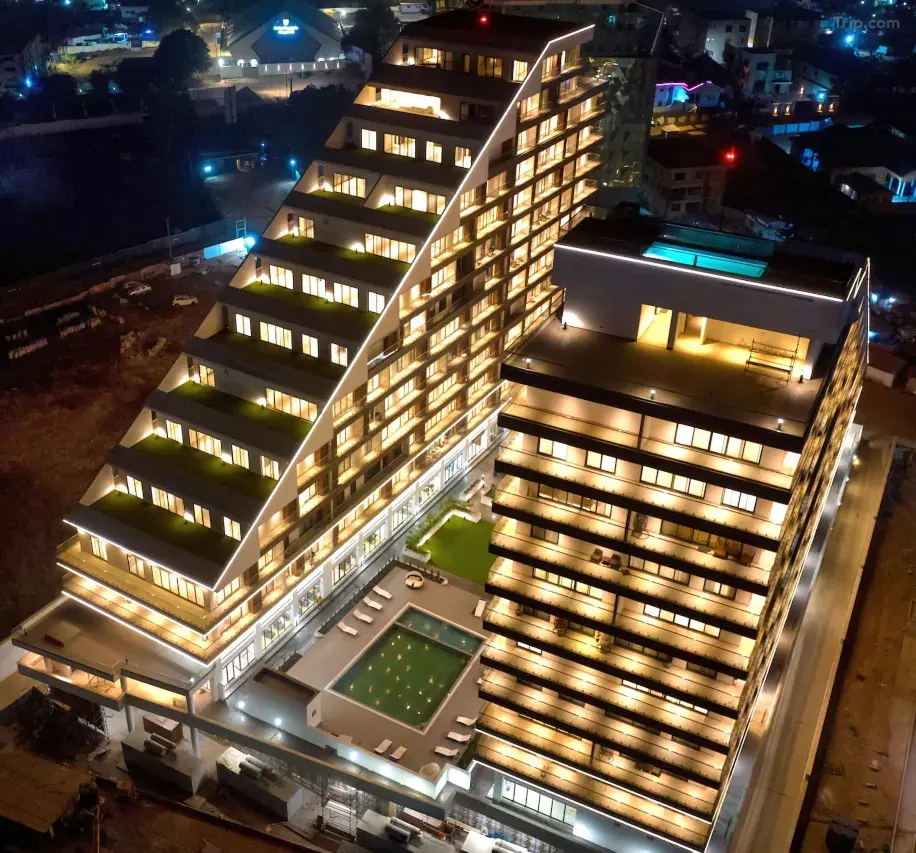
At Capemay, we have a proven track record of delivering on ambitious luxury properties. Over 18 years of business, we have refined our process while helping to transform Accra’s skyline. We’ve done so by combining our local knowledge with a commitment to high International standards.
This philosophy continues to attract buyers seeking premium assets that are globally competitive yet firmly rooted in Ghana’s urban future.
Contact Us
For private enquiries or further information, Capemay Properties can be contacted through its official sales office.
+233 24 287 2832 or +233 27 010 1826